
An ornate cave unique in the world
The Gargas caves are among the oldest authentic prehistoric sites still open to the public. At the foot of the Pyrenees, in the protected area of the future Comminges Barousse Pyrénées regional park, they are located in the Neste valley in the municipality of Aventignan (Hautes-Pyrénées - Occitanie). The caves are carved into a northern Pyrenean limestone ridge, the Bois du Gouret massif, which overlooks the Neste d'Aure valley, two kilometres upstream from its confluence with the Garonne.
Comprising two separate caves, their respective entrances open onto the north-north-west facing hillside. The lower cave (Gargas I) is wide and low with an almost horizontal vault. It ends in the oubliette shaft, which opens up the deep network of Gargas. The upper cave (Gargas II), on the other hand, is narrow and slender, its walls covered in white calcite, and it was separated from Gargas I for a long time due to sedimentary plugging at their junction. The two caves were linked together at the end of the 19th century by a small artificial tunnel.
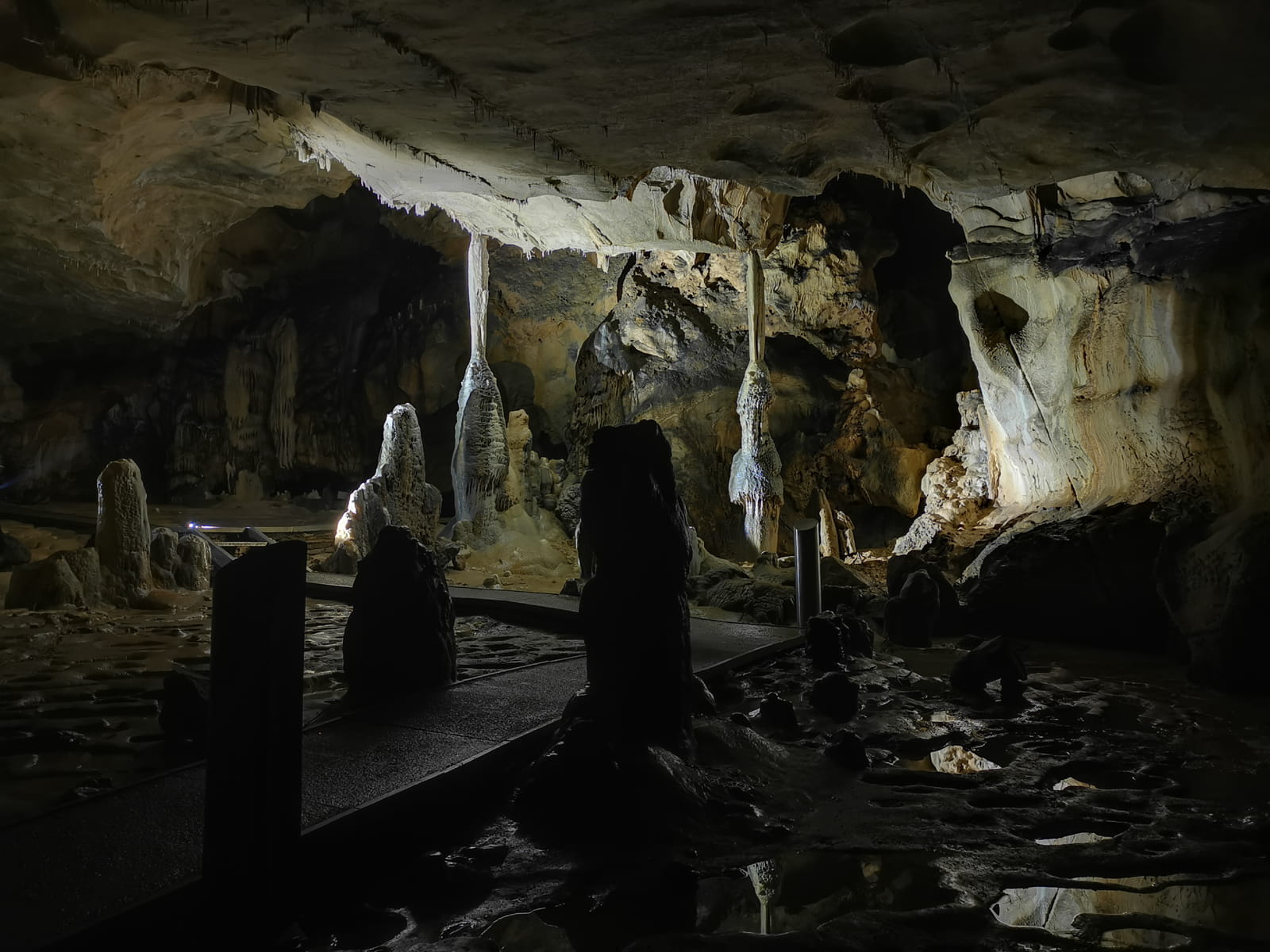
Listed as historic monuments in 1910, the caves of Gargas have revealed many archaeological treasures. They were frequented by tribes of homo-sapiens, hunter-gatherers during a period of prehistory known as the Gravettian time (29,000 to 22,000 years BP). Our ancestors left numerous traces of their presence in the floor of the entrance hall to Gargas I. Excavations carried out in 1911-1913 by H. Breuil and E. Carthaillac and more recently since 2004 by P. Foucher and C. San Juan-Foucher have uncovered vestiges of their way of life (hearths, tools, the fruits of their hunting, etc.) and their crafts (ornaments, pigments, etc.).
But the most obvious evidence of our prehistoric ancestors is the diversity and richness of the representations left on the walls (parietal art). At Gargas, you can see animal engravings and paintings, geometric signs, female symbols and, above all, negative hands.
Gargas "the sanctuary of hands"
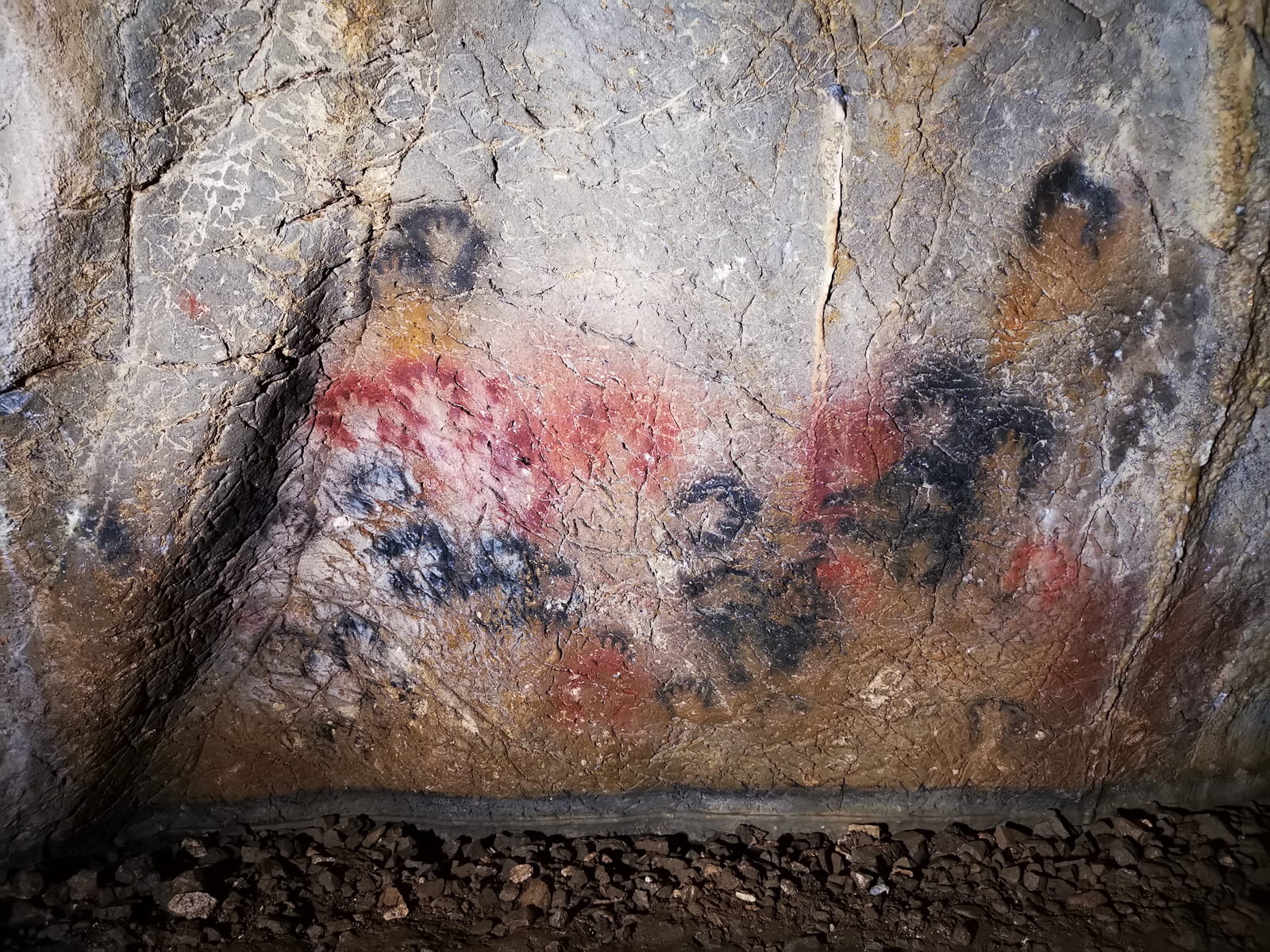
What really sets Gargas apart are the prehistoric hand stencils. In all, over 200 negative hand paintings (of men, women and children) have been identified. These stencils were made by dabbing or spraying black, red, ochre or white pigments around the hands applied to the wall. Although the reason for this practice is not known today, several hypotheses were put forward throughout the 20th century: language, signature or symbolic practices linked to shamanic rituals. The mystery remains…
The originality of the Gargas hands is also expressed by the fact that the vast majority of these hands are incomplete, i.e. each finger is missing one or more phalanges. This oddity has given rise to debate and various interpretations from the scientific community: ritual mutilation? Pathologies, frostbite? Bent fingers?
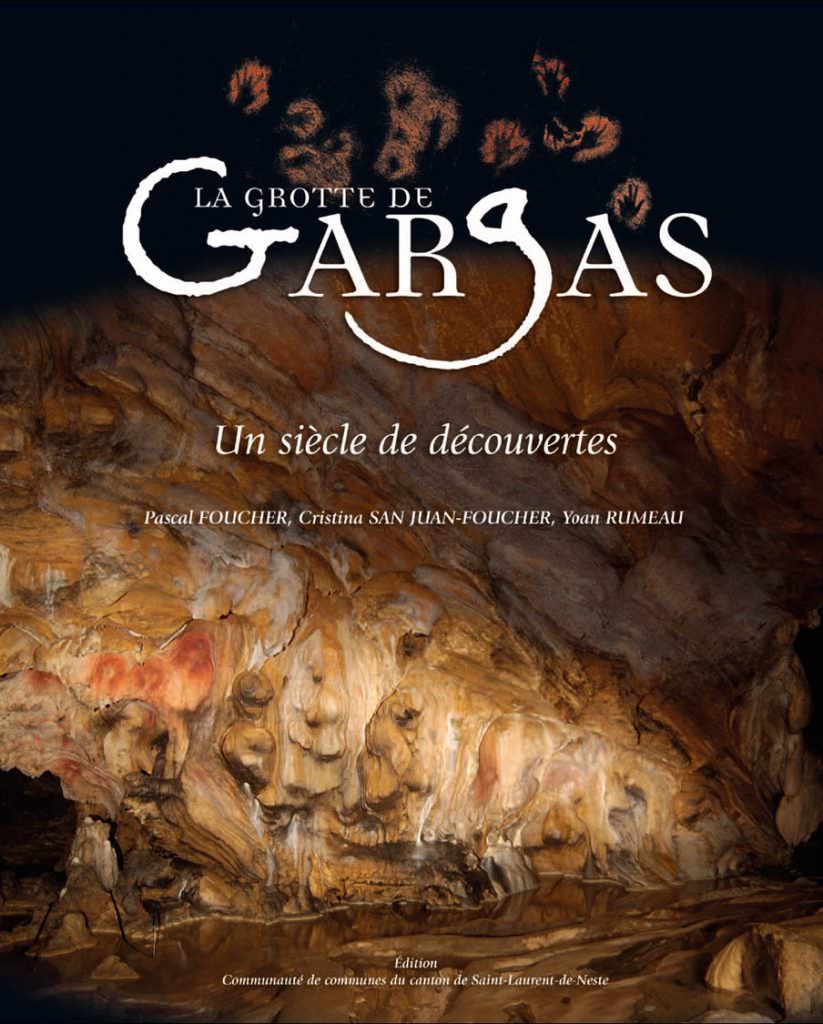
If you want to find out more about the caves at Gargas, a visit to the original site is a must. Nestploria also has a book published in 2007 entitled "Gargas, un siècle de découvertes" (Gargas, a century of discoveries), co-authored by P. Foucher and C. San Juan-Foucher (the archaeologists currently conducting research at Gargas) and Y. Rumeau (historian). The book provides a comprehensive overview of the discoveries made in Gargas in recent years.
The prehistoric caves of Gargas are the property of the municipality of Aventignan, which is responsible for their conservation under the supervision of the Ministry of Culture. Since 2010, it has entrusted the Neste Barousse community of communes with the organisation of tours, cultural mediation and tourism promotion.
The Gargas site is part of the Council of Europe's Cultural Route of Prehistoric Rock Art (C.A.R.P.), which brings together 44 sites in 8 different countries: Spain, Portugal, France, Italy, Norway, Finland, Georgia and Azerbaijan: Spain, Portugal, France, Italy, Norway, Finland, Georgia and Azerbaijan.