An exceptional heritage that has spanned the millennia
A fragile, well-preserved heritage
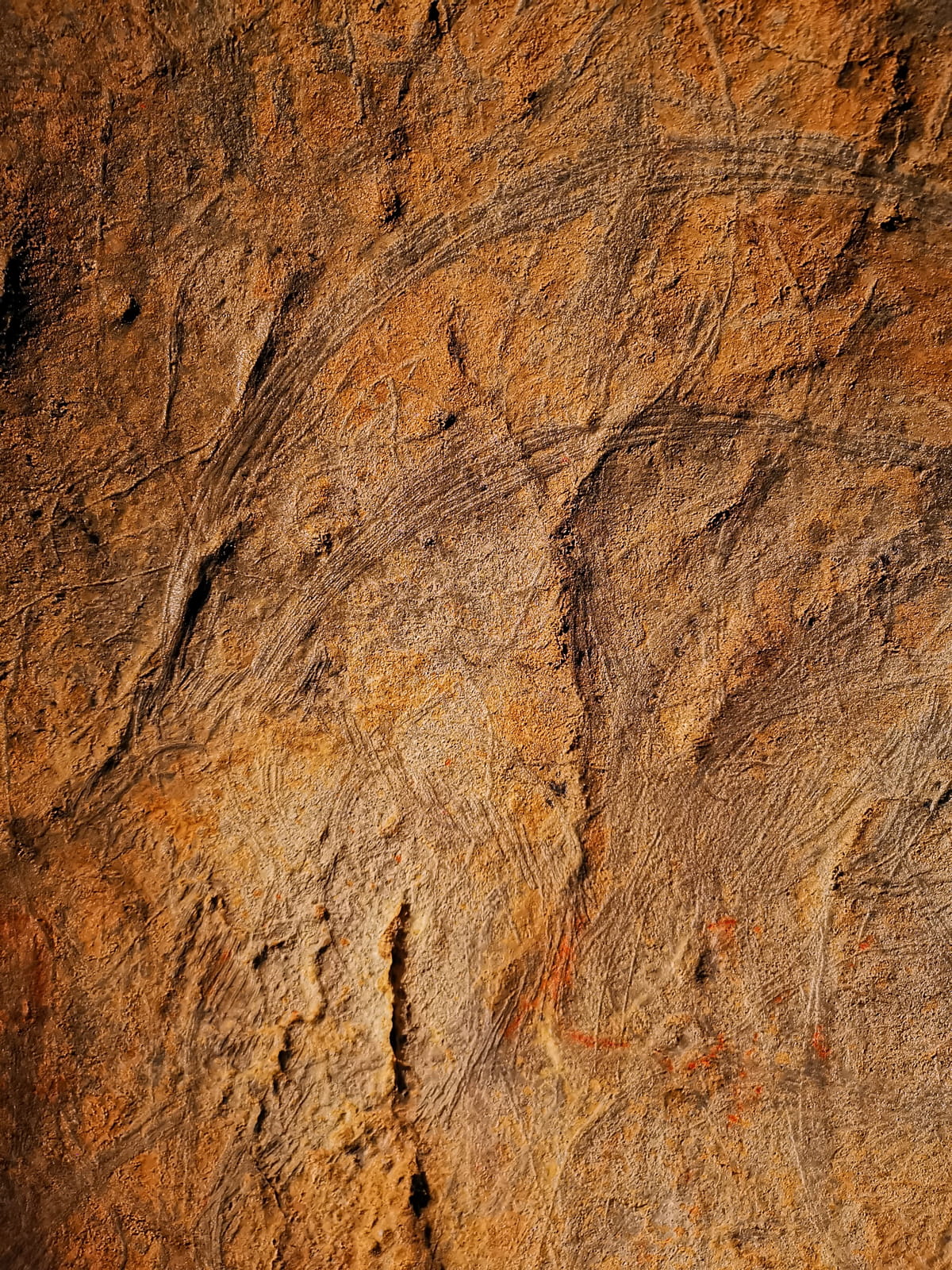
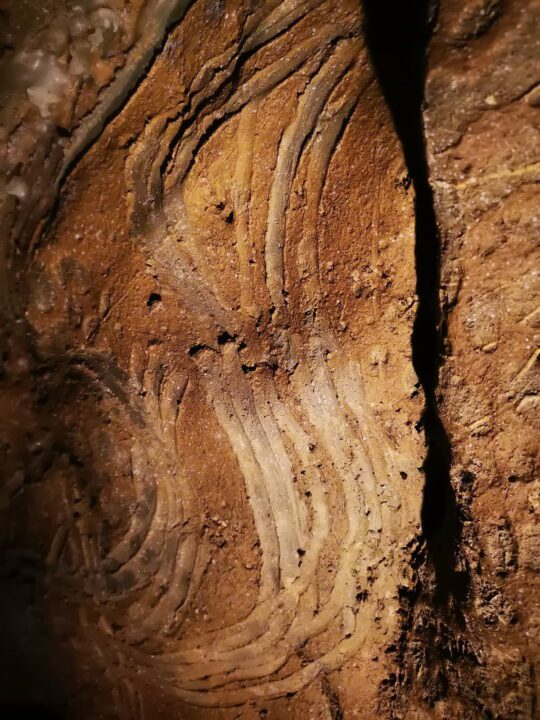
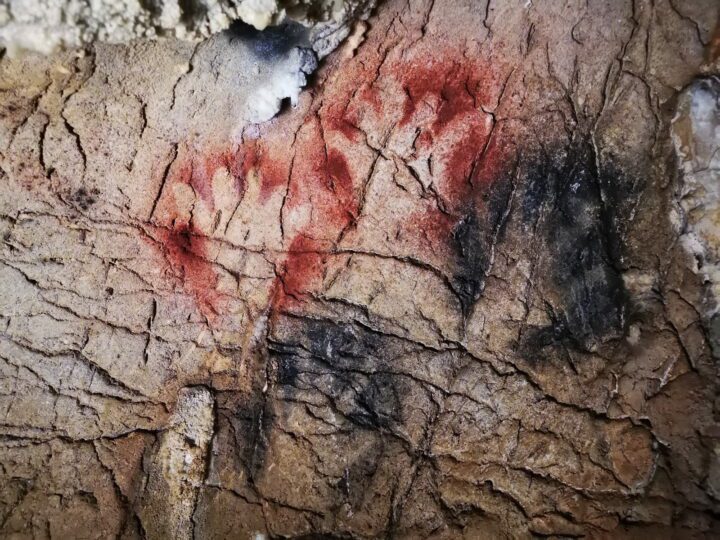
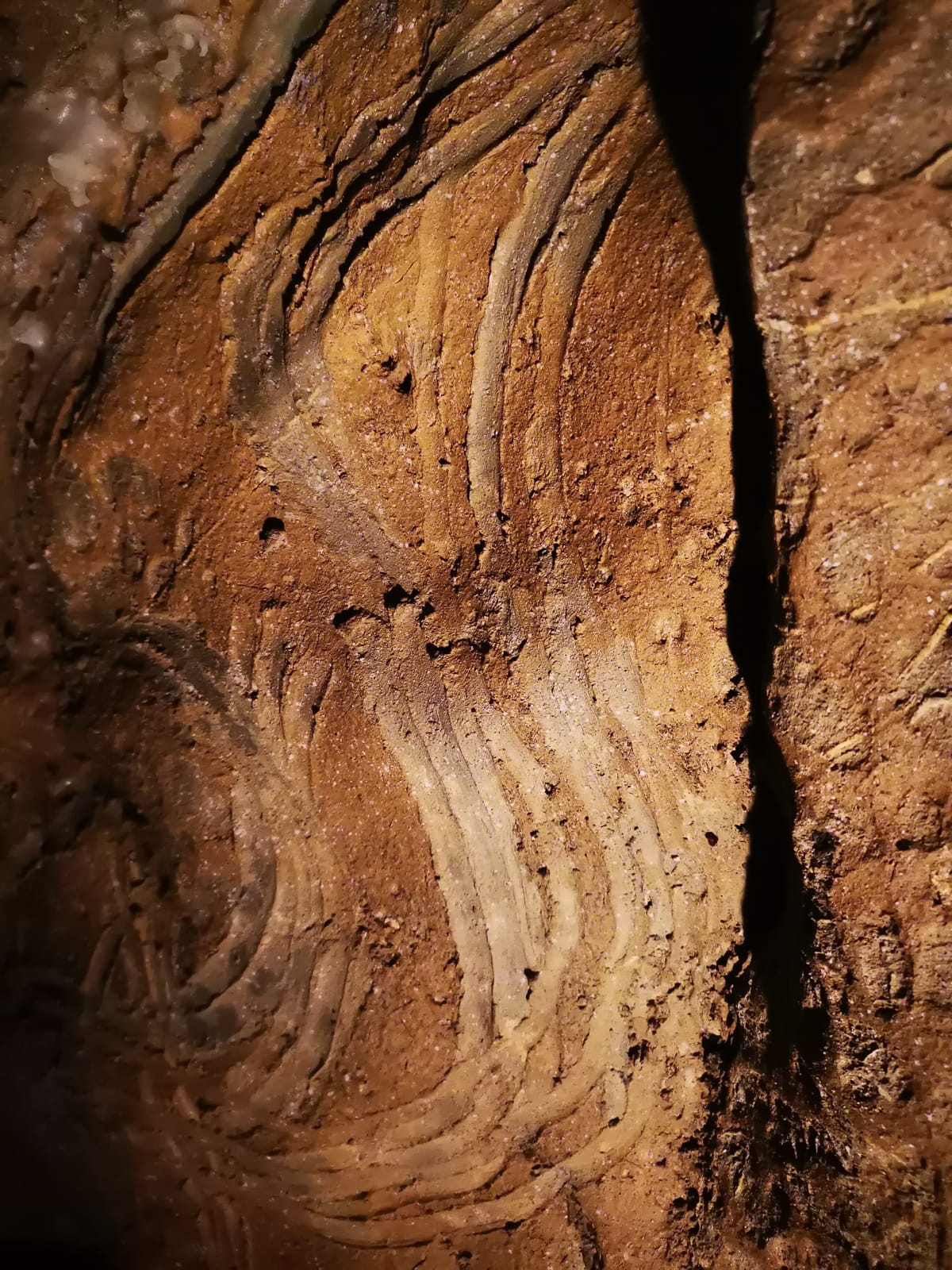
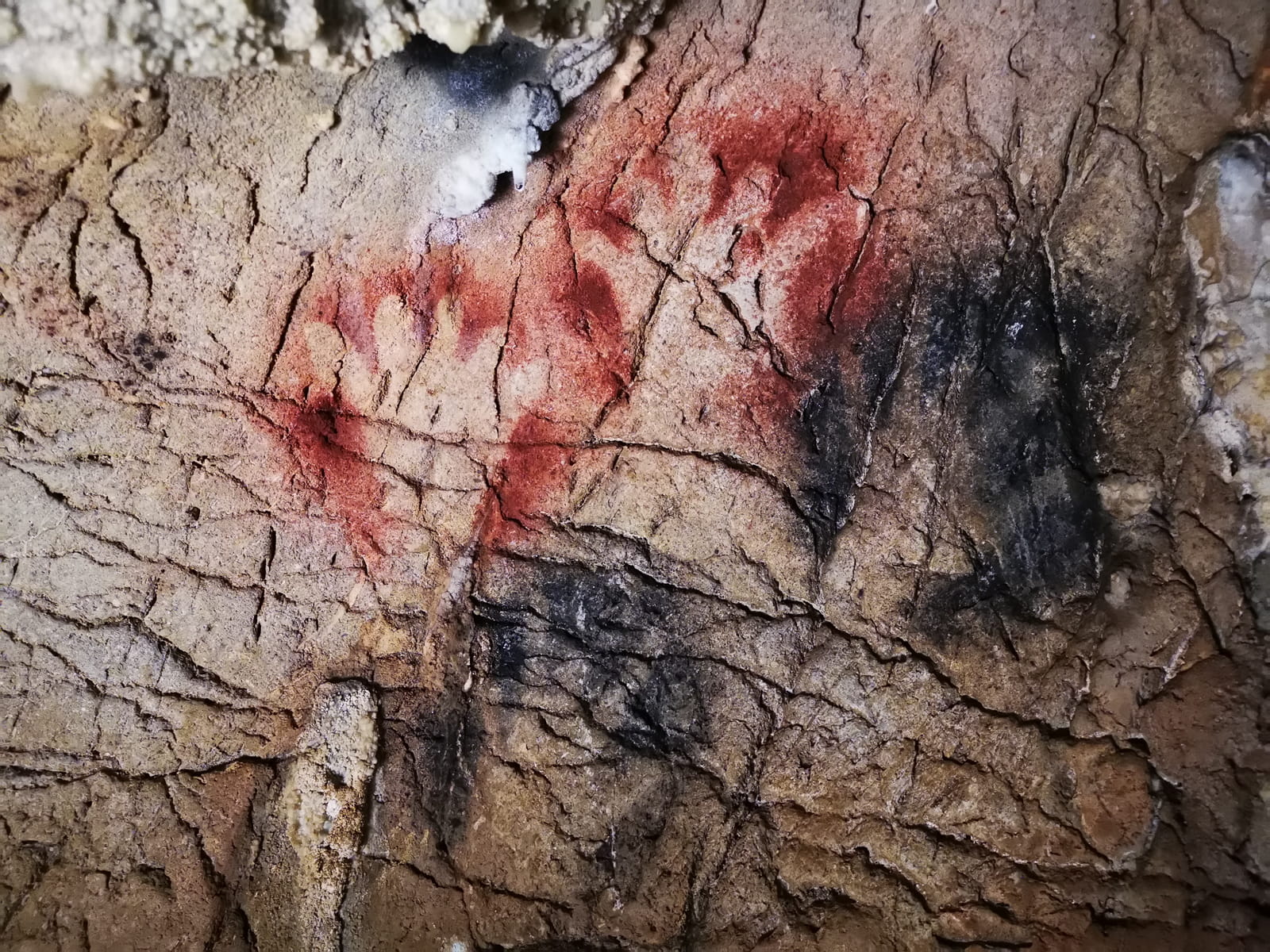
Despite the fact that the site has been used for tourism since the 19th century, the remains of the prehistoric paintings at Gargas are particularly well preserved : some paintings have survived almost 300 centuries to reach us almost intact. This is mainly due to the environmental context, with remarkably stable air and water circulation in the cave over very long periods.
To preserve such an exceptional heritage for future generations, we need to take into account the physico-chemical impact of tourist visits to the cave.
In addition to a complete overhaul of the visitor circuit and lighting system, there is now a real-time monitoring system for CO2 levels, temperature and humidity.
A fragile heritage
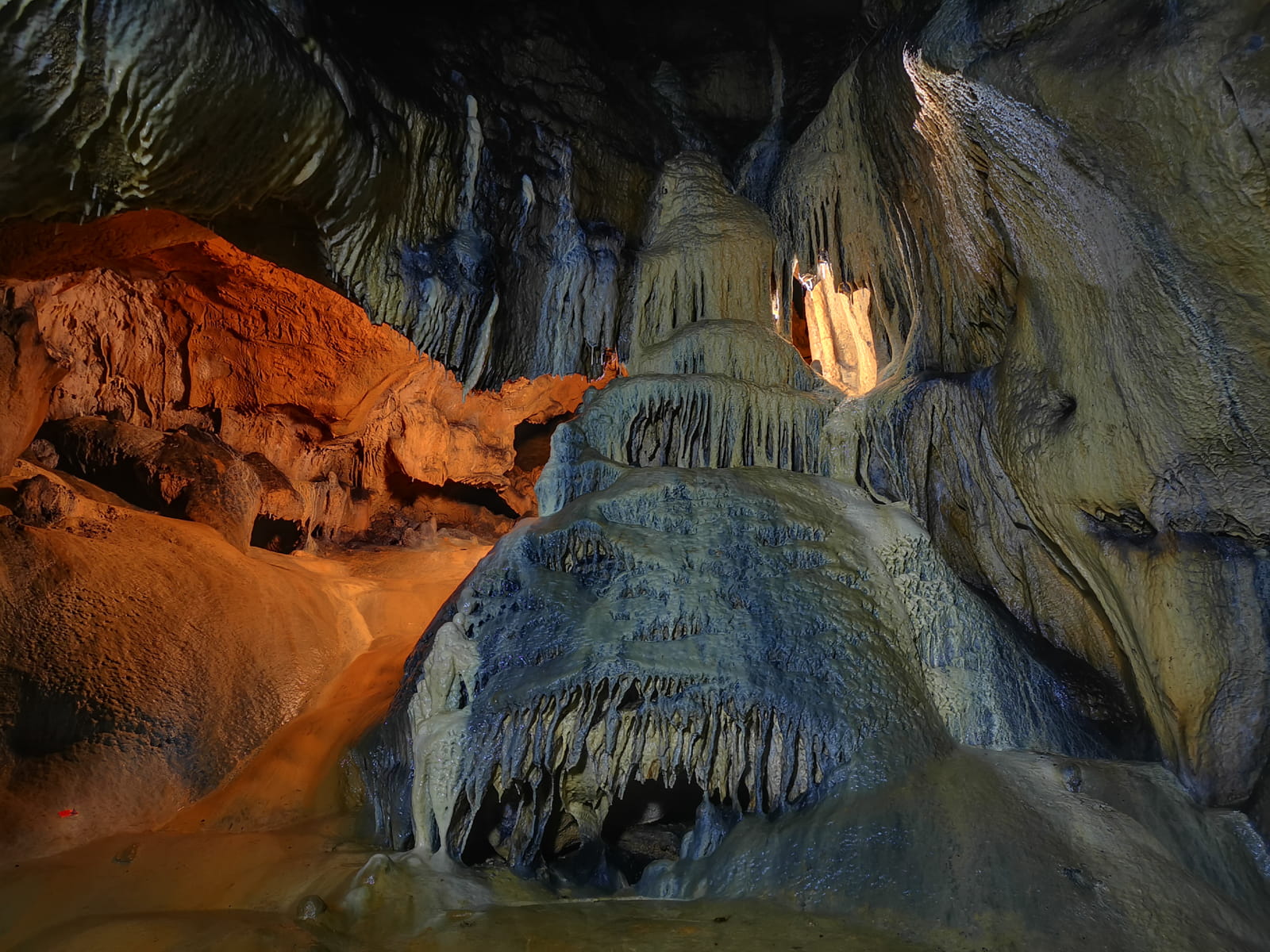
In the early 1990s, it became clear that the cave's health was deteriorating: black slimy jellies on the ceilings, green algae stains on the calcite and alteration of the stalagmitic concretions. The Midi-Pyrénées Regional Archaeology Department, in close collaboration with the Moulis Underground Laboratory, set about establishing the most detailed and precise environmental monitoring possible : air and rock temperature, atmospheric pressure, air humidity and carbon dioxide content, water infiltration rate, thanks in particular to the installation of climatological sensors. Regular recordings revealed that the cave's internal climate was permanently destabilized during July and August, the peak tourist season. The lighting system in use at the time was also called into question. These environmental studies made it possible to determine the cave's climatic stability and guide a new development project.
Site-friendly layout and organization
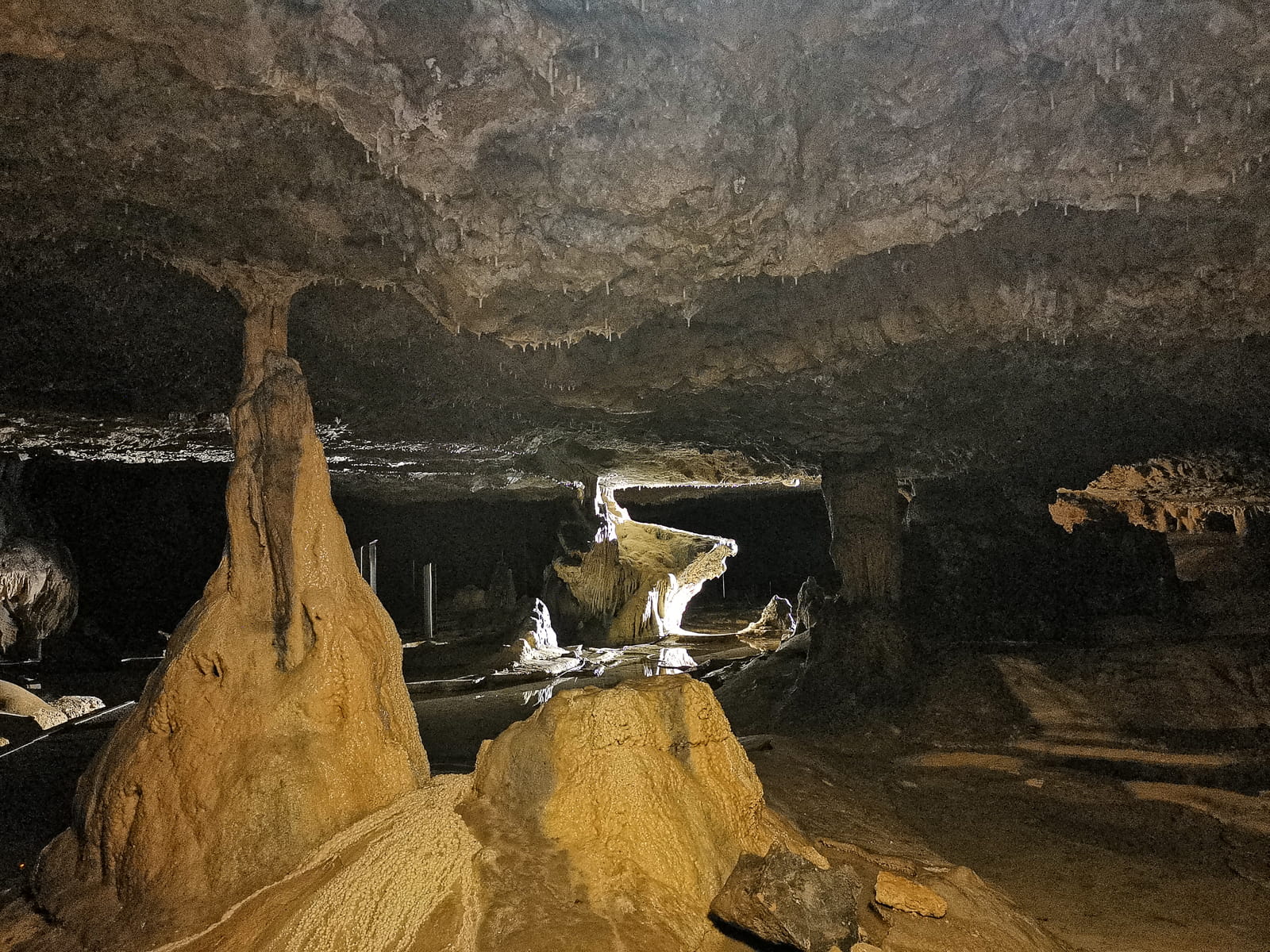
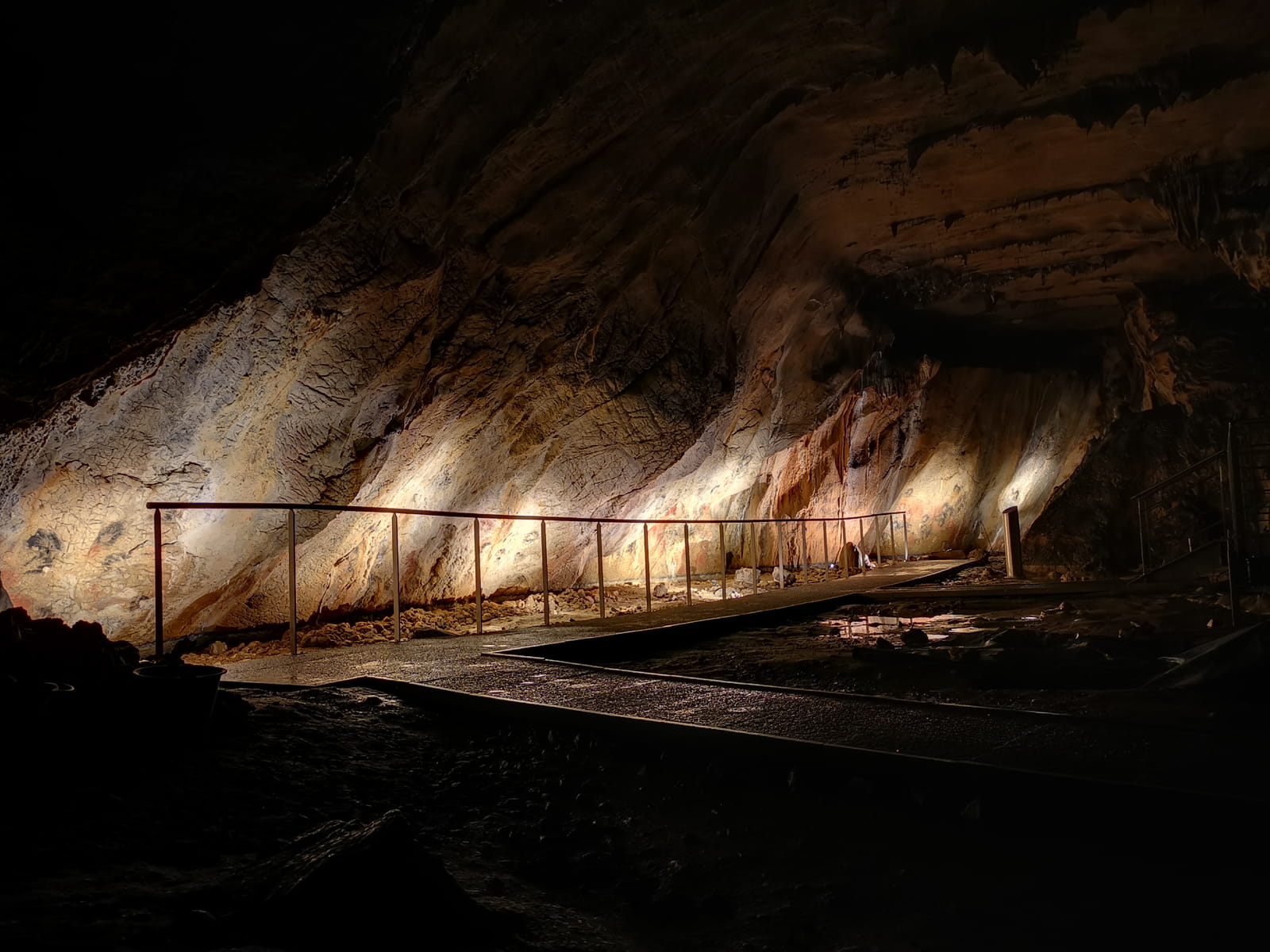
In 1997, the Ministry of Culture and the commune of Aventignan decided to redevelop the entire Gargas cave. The project was completed in 2004. The new layout reverses the direction of the visit, starting with the upper gallery and ending with the large hand wall. This new layout, which integrates the various sensors and instruments required for environmental monitoring, now enables complete and continuous control of the essential parameters of the cave's equilibrium and prevents any destabilization. By limiting the number of visitors per group per day (to a maximum of 250), the tour protocol helps to ensure the site's longevity and the proper conservation of the thousand-year-old art it houses.
A unique observatory of climate change and a laboratory for combating its effects in decorated caves
Today, Gargas is one of the caves being studied as part of the DECACLIM [DEcorated CAves under CLIMate changes: Redefining an effective conservation strategy] collaborative research project selected for funding under the 2022 Generic Call for Projects. The effects of global warming can be felt even in prehistoric caves, where rock drawings preserved for thousands of years are being impacted. The conservation of these drawings, which lie at the interface between the rocky surface, the atmosphere and a thin film of water covering them, is the result of a fragile equilibrium, jeopardized by the modification of the cave's aeraulics generated by the increase in the temperature difference between the surface and the bottom of the cave.
Increased CO2 concentration in the air also plays a detrimental role, contributing to more solid deposits and corrosion on the surface. With the aim of defining strategies to combat these phenomena, this project coordinated by Géosciences Environnement Toulouse (G.E.T) brings together the skills of 8 laboratories: Environnements et Paéoenvironnements Océaniques et Continentaux (E.P.O. C in Bordeaux) - Institut de Physique du Globe de Paris (I.P.G.P) - Laboratoire de Recherche des Monuments Historiques (L.R.M.H) - GeoRessources in Nancy - Laboratoire des Sciences du Climat et de l'Environnement (L.S.C.E in Gif sur Yvette) - Centre National de la Préhistoire (CPN PACEA in Paris) and LEMTA (Nancy).